


Once upon a time, I spent some time with BAOR in Paderborn in Germany. I was near fluent in German having learned the three most important phrases: Möchtest du eine Zigarette? (Would you like a cigarette?); Möchtest du mit mir tanzen? (Would you like a dance with me); “Ich hätte gerne ein großes Bier und ein Kalbsschnitzel mit Pommes, bitte.“ (I’ll have a large beer and veal escalope with chips please).
I also discovered for various reasons, that they were excellent at keeping paper, producing paper, filing paper, and referring to paper years after the other paper activities had ended. It was what had made their internal intelligence systems, at the most mundane level, so effective for centuries and regardless of which political power was in control. There were of course the occasional blights such as girls and boys selling their paper souls to AN Other for whatever reason, but their product was always considered first-rate because they kept brilliant records.
I mention all this because, post Kings Speech theatre, I had been pondering the Duke of Windsor’s predilection for the German world view, and what might have been. Random thoughts of there but for the Grace of God, but surely Hitler would have gone by now, but we’d have still had the Russian menace and so on and so forth, and then I was away down the rabbit hole. Simultaneously, across my desk, came the latest health report from Germany’s National Stats Office, Destatis, which on 8th October published the cost of illness per person by age and sex, for 2024. Somewhere near the bottom of the hole, (so applicable when chatting with the GP), I heard the Doc say that if I failed to comply with instructions, my chances of dying would increase over the next ten years by 45%!
Stap me vitals, I exclaimed. What…. I could be dead by the time I’m 85… what are the chances! (45% greater apparently) ??? Also (and thinking of Destatis), can I just ask from a P&L perspective, wouldn’t the NHS be better off financially at my ignoring the odds?
And here is the point.
GPs can’t answer that and not on Hippocratic or moral grounds. Bizarrely neither can the Health Secretary, the PM, the chancellor or any civil servant. No one in the UK knows what it actually costs every year for the NHS to look after a sprightly 65-year-old girl and a rickety 75-year-old chap. Why???
Why is there no basic set of stats that says there are X patients 52% are women and 48% are men, (yeah, yeah trans blah), and women cost a% more than men, because of children, and men cost b% more after than women over the age of 73 or whatever? There’s your budget and unless you intend changing the system, that’s what you need. Simples. Surely?
We know that in 2017, York University did a study which published the data for single-year age-by-sex NHS costs for 2014-15. Nuffield has done some work since, but it is only on a hospital spend basis and without the sex split. Nobody routinely publishes NHS cost per person by age and sex., and the reason is that the NHS doesn’t cost patients, it costs activity - e.g the cost of a hip replacement or an A&E visit, not what each person costs.
A per-person figure has to be built by linking hospital records to costs and dividing by population. There’s no patient-level costing for GP visits or prescribing, so every study estimates it from consultation rates. The OBR uses an age-only health spending profile in its long-term projections, including the 2026 Fiscal Risks and Sustainability report. But that isn’t published by sex, and the values are statistical estimates.
The extremely detailed Destatis report can state without fear of contradiction that women’s higher overall cost is mainly due to longer life expectancy, plus pregnancy, childbirth and sex-specific conditions. That said, their report is also much wider. It covers all health spending (state insurance, private insurance and out-of-pocket) and includes long-term nursing care. So the real German medical cost for the combined age group of 85+ is €30,000 per annum. The extrapolated York figures and using worst-case inflation figures and remembering that the NHS figures exclude social care, (because NO ONE KNOWS), is £9,690.
Knowing what we know about German efficiency and their abilities with paper, one can only conclude that the NHS is woefully under-budgeted, or isn’t providing the same level of Germanic care, or the figures are wrong.
Sadly, I wish this absence of real data only applied to the health costs… but of course, it doesn’t. Only recently the nation was told that the UK’s main unemployment survey is so badly answered that the statistics regulator says it can’t be relied on for regional detail, and its replacement is running at least eighteen months late. We also know that whilst the government is preparing to approve a new wave of hyperscale data centres, it has no record of who uses the existing ones or what for. Starmer promised to cut spending on consultants, yet Whitehall still has no consistent figures on how much each department actually spends.
There is wide talk of the exciting innovations in a Regional Growth policy, but they might be even more exciting if the government actually had any data to show whether its regional growth spending works. It doesn’t! The government doesn’t know how many of its answers to Parliament are drafted with AI, and after spending years planning to replace the census with administrative data, the UK has neither the coverage nor ability to reliably count people in high-migration areas.
Police recorded the ethnicity of only about 37% of grooming-gang suspects, a gap Baroness Casey called a “major failing”. The Ministry of Justice says its conviction data can’t show whether a sex offender is a foreign national, and it is appealing an order from the Information Commissioner to publish convictions by nationality. The Home Office admits it doesn’t know how many illegal migrants or visa Overstayers are in the UK, has never published an estimate of the illegal population, and hasn’t published exit-check data since 2020.
Germany can provide at least 60% of that data.
Simply put, we cannot function without accurate data. We cannot make political, financial and social decisions without real knowledge. We are making matters so much worse for ourselves.
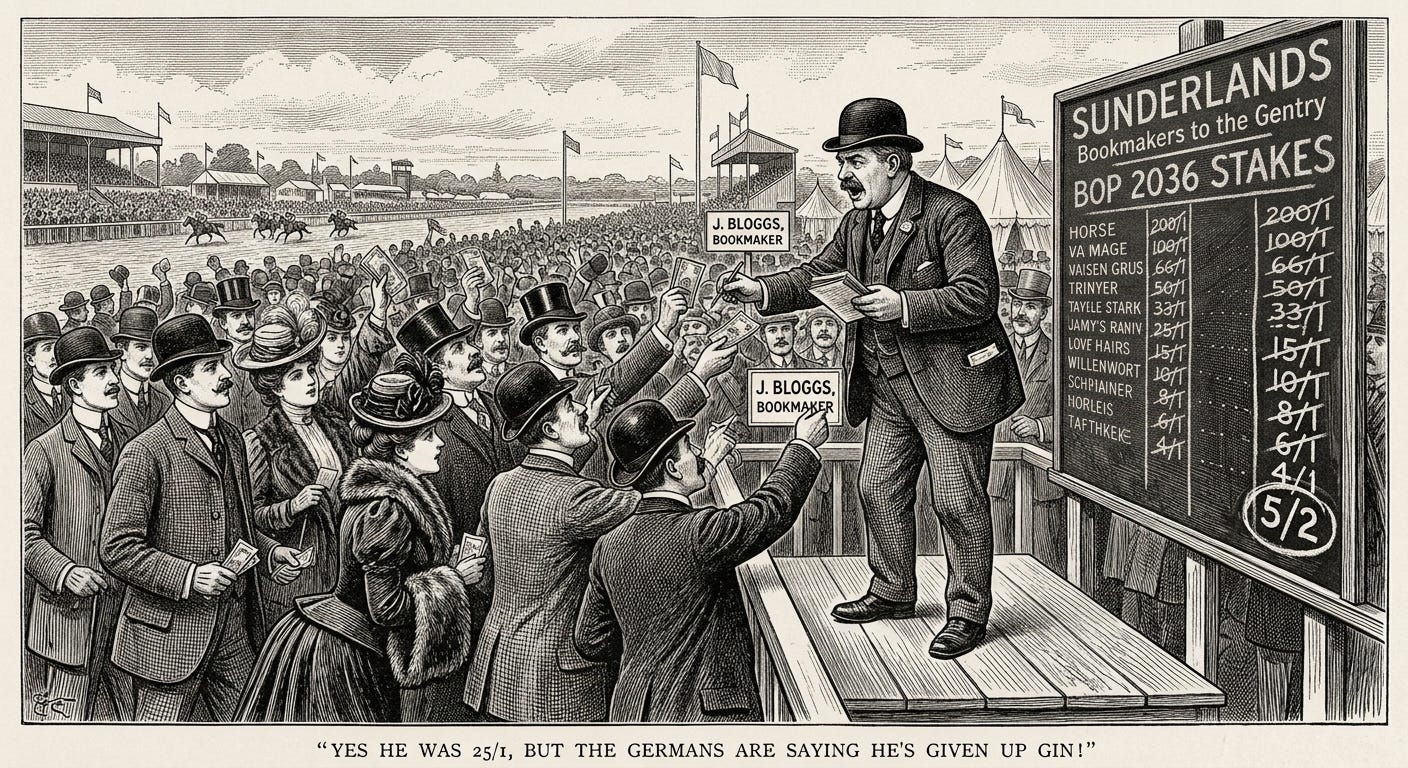
PS: Do not go to that most gentlemanly of all rails bookmakers, Sunderland’s, at any decent meeting, and ask for a price on my reaching 85. Simon can be very generous with his odds, but he knows a ringer when he sees one!